
Reimagining a Listed Building for Modern Office Interior Design
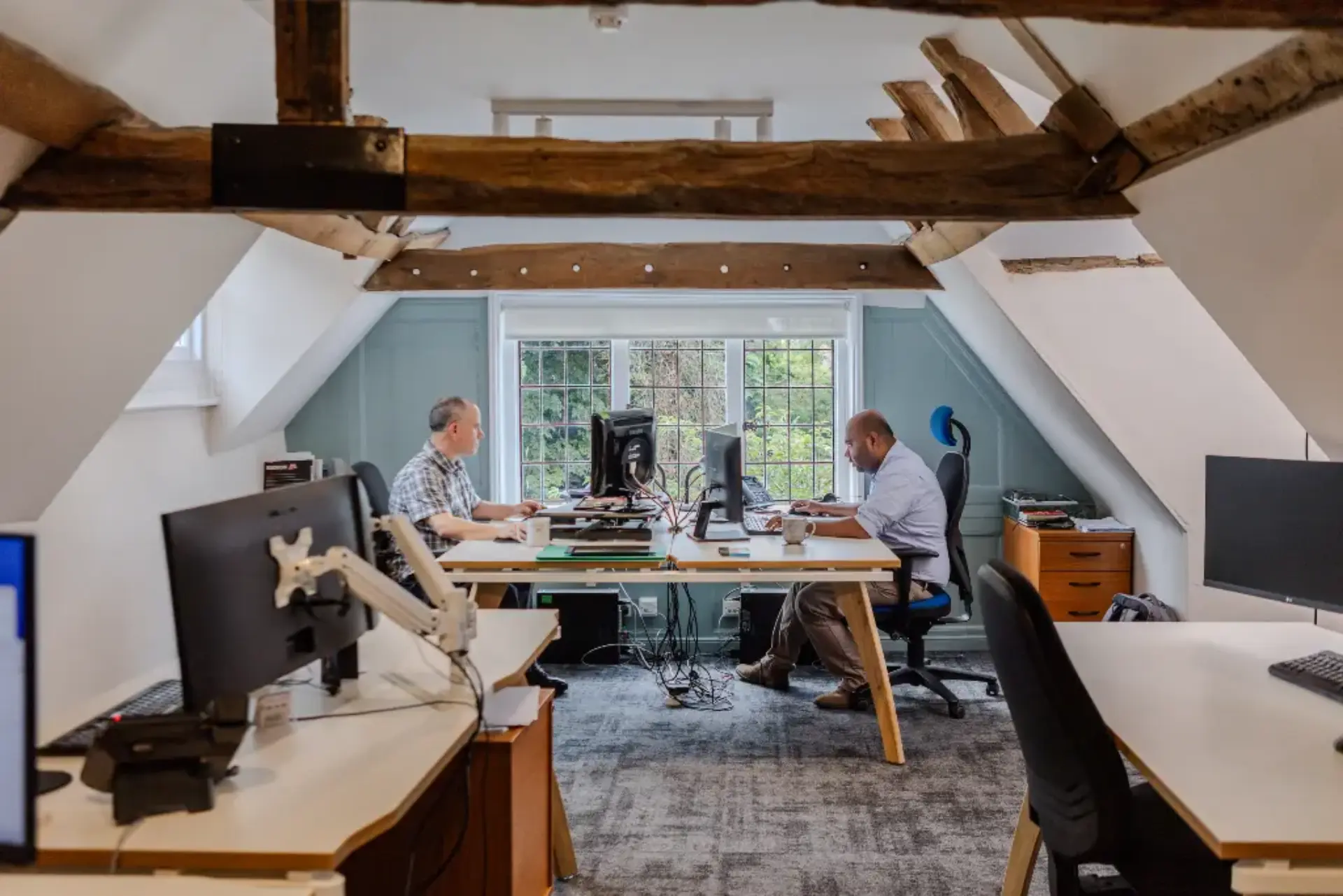
A complete office refurbishment of a listed building in Canterbury, balancing contemporary interior design with its historic character
When we launched The Latchmere House Partnership with a team of property professionals, we set out to create a collaborative workspace in Canterbury. Recognising its potential, we acquired a vacant Grade II listed building in Canterbury city centre.
Our partners, James Clague Architects, secured planning permission and listed building consent for a sensitive refurbishment. We then led the interior architecture and office interior design, shaping a cohesive, characterful workspace.
We carefully considered each space to improve flow, light, and usability, while preserving the features that define the building’s identity.
The result is a design-led workplace that supports day-to-day working while offering a welcoming environment where clients can explore materials, meet the wider team, and engage with the design process.
Latchmere House, A Grade II Listed Building in the Heart of Canterbury
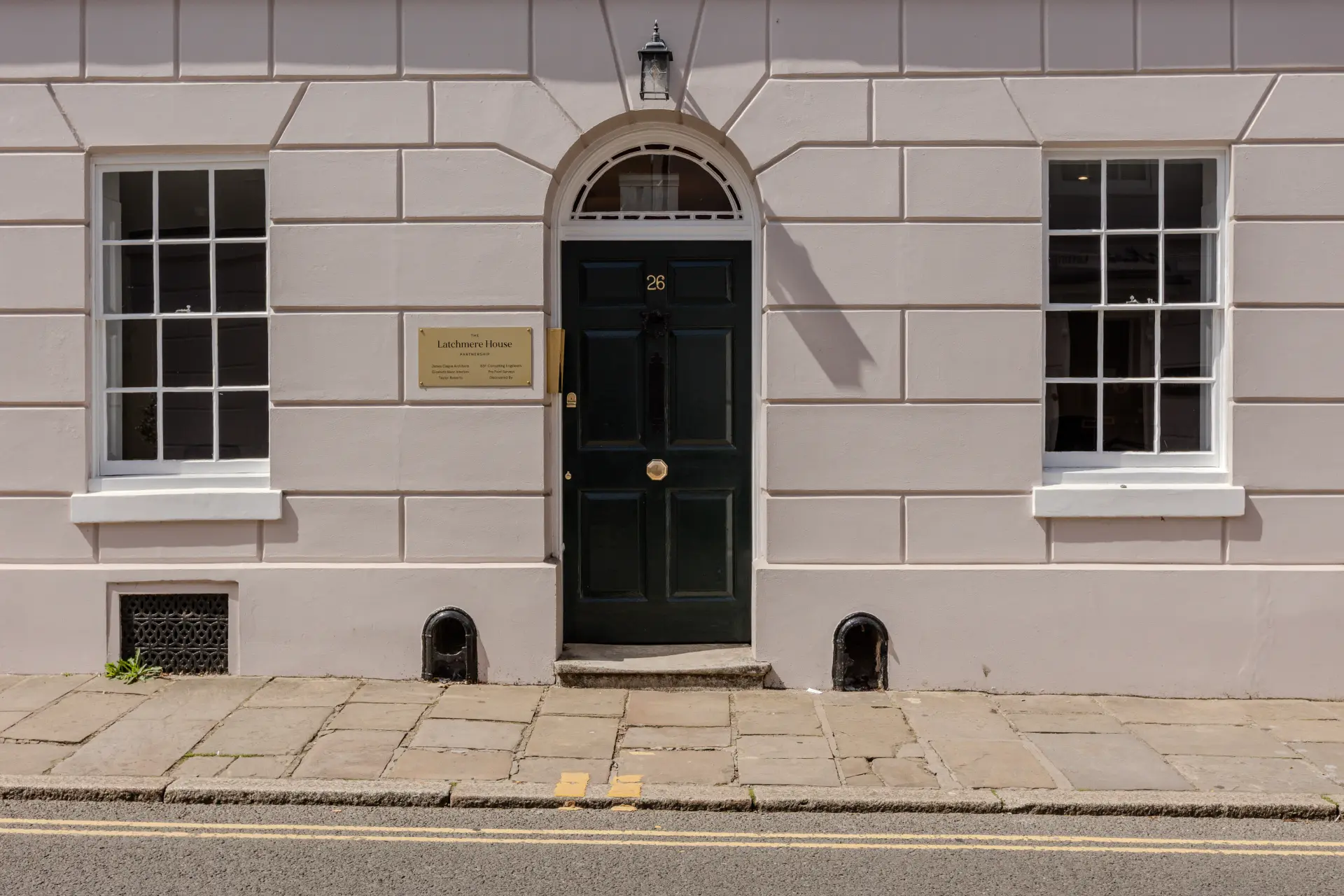
Latchmere House is a Grade II listed building on Watling Street, in the centre of Canterbury, within both the Conservation Area and an Area of Archaeological Importance. The surrounding streets are tightly packed, with narrow plots and a mix of architectural styles that reflect the city’s history.
The building dates back to the early 17th century and was later refaced in the 19th century. It combines a formal Georgian façade with much older internal fabric, including reused Roman brickwork, medieval masonry, exposed beams, and original fireplaces.
Before the refurbishment, the layout was fragmented, with small, disconnected rooms that limited natural light. The lower floors had been vacant for several years, and much of the building needed repair.
The Brief: Layering Modern Office Interior Design Within a Listed Building
The project focused on creating a shared workplace that could bring the partnership’s specialists together under one roof.
Key priorities included improving circulation, usability, and comfort.
We had a vision for a distinctive workspace that balances professional use with a more engaging, client-facing experience.
The Design: Working With the Listed Property
Rather than imposing a new layout, we worked with the existing structure, allowing original features and proportions to shape each space.
This meant retaining and revealing historic elements where possible, while introducing carefully considered interventions to support modern office use.
We also discreetly upgraded all electrical and plumbing systems to restore the building's full functionality.
Spatial Planning & Layout
We removed non-original partitions to open up the plan and reinstated original doorways.
This allowed us to:
- Create more intuitive circulation routes throughout the building
- Introduce flexible office spaces that can adapt to different ways of working
- Define areas for focused work, meetings, and informal interaction.
Natural Light
We adapted existing openings and added new French doors to bring in more light and improve the connection to the rear garden.
We introduced glazed partitions to keep light moving through the building, helping the spaces feel brighter and more open while providing privacy.
Integrating Modern Interventions
We kept new interventions deliberately understated, allowing the historic fabric to remain the focus while improving the building’s performance.
We we obtainied consent for slimline secondary glazing throughout to improve thermal comfort and acoustics without altering the original windows.
We carefully detailed new timber windows and French doors to fit within existing openings, preserving the original façade.
Colour, Materials & Detail
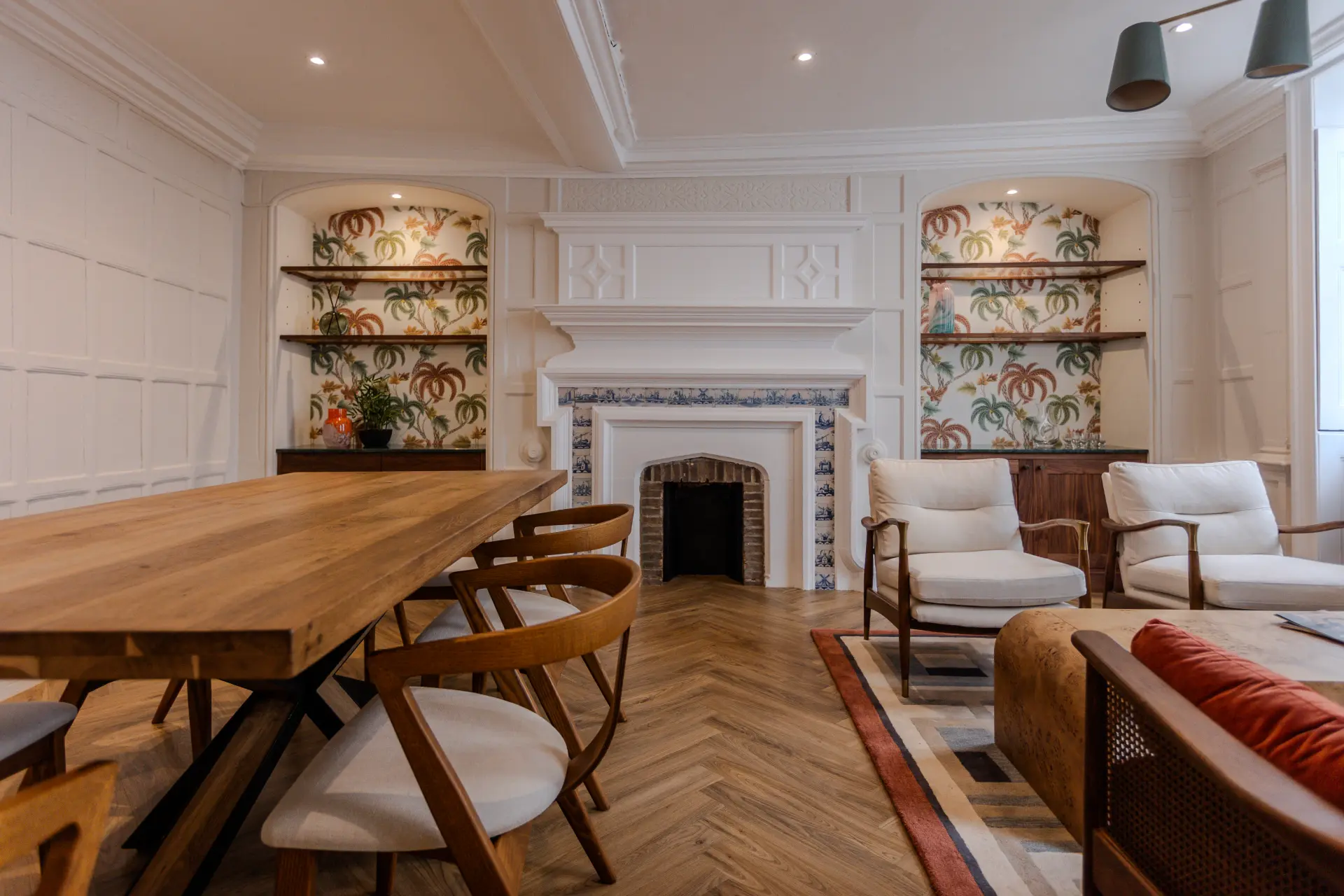
The material palette builds on the building’s character while adding a more expressive layer to the interiors.
Functional, Considered Office Interiors
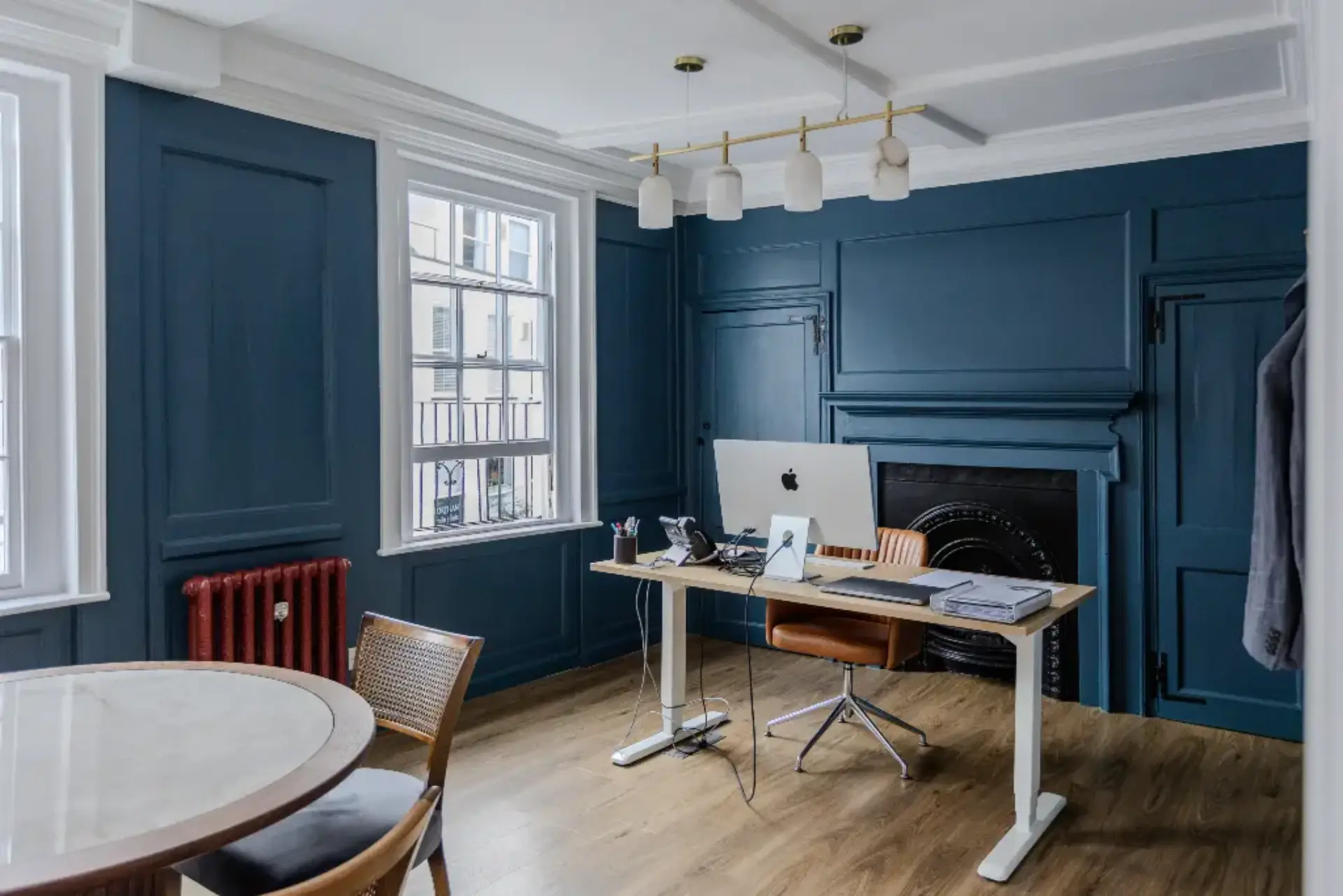
In the office spaces, we used a paired back palette, with darker tones and colour accents introduced selectively to define each room without overwhelming the space.
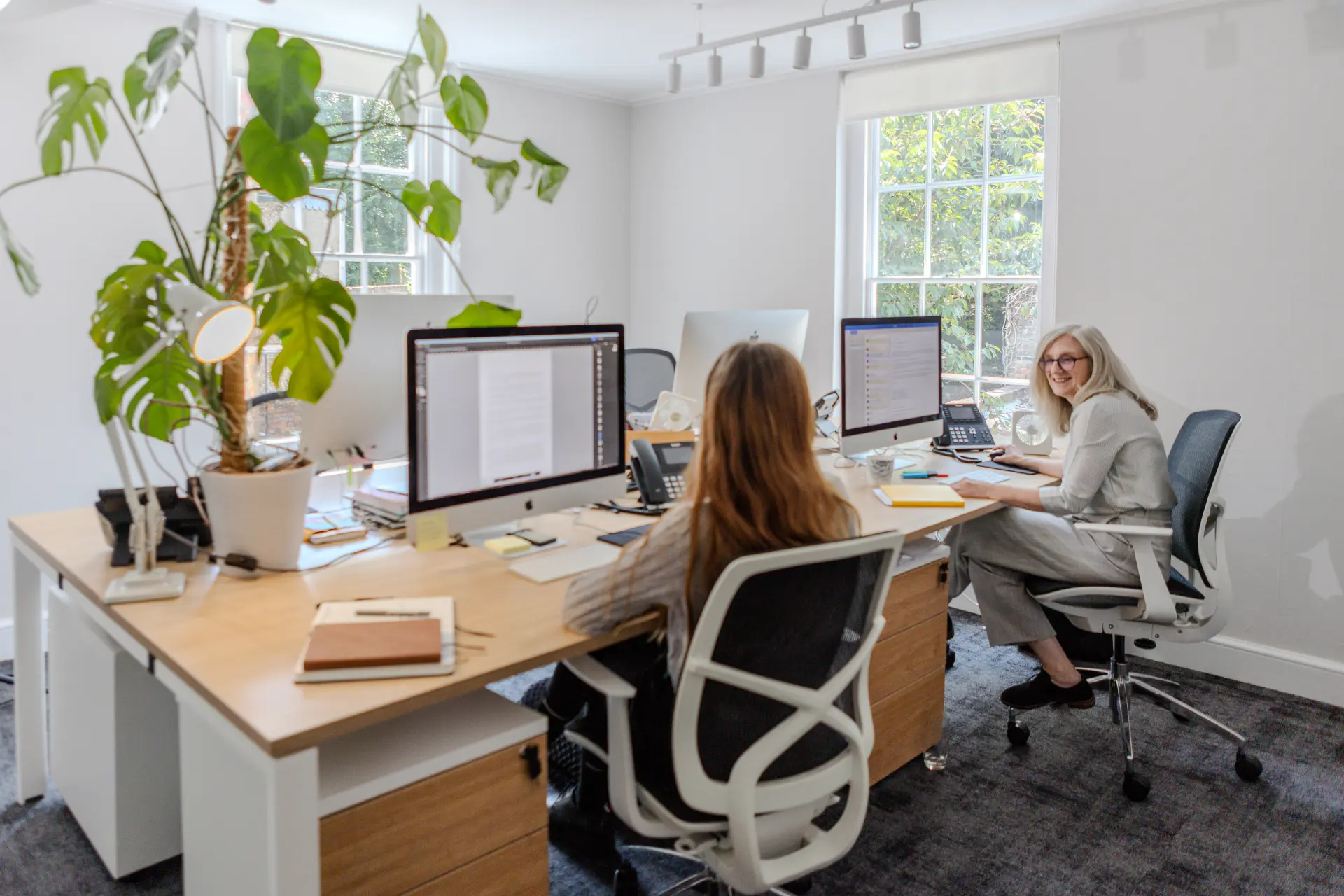
A mix of deeper and lighter wall colours, warm timber floors, and softer neutral finishes creates a calm, focused working environment, allowing original features to remain prominent.
We selected lighting, joinery, and furniture to sit comfortably within the historic setting, balancing contemporary office requirements with the building’s character.
Bathrooms as Characterful Spaces
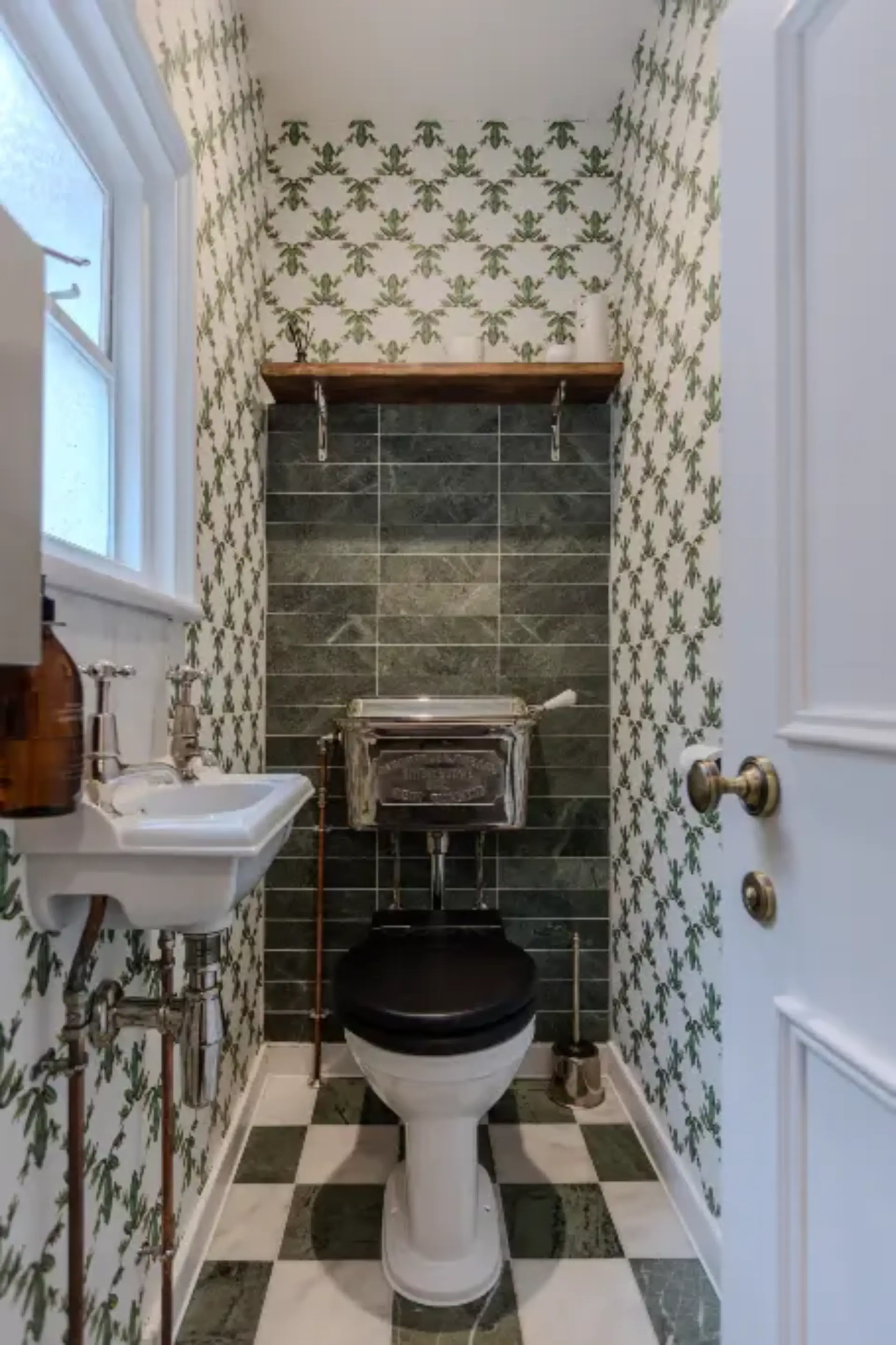
We treated the bathrooms as opportunities to introduce colour, patterns, and materials to contrast against the historic backdrop.
Each room has its own identity. Patterned wallpapers, including bold flamingo and botanical motifs, are paired with tiled surfaces in rich greens, soft and deep blues, and pinks, creating distinct yet cohesive schemes throughout the building.
We combined classic sanitaryware from Catchpole & Rye with more decorative elements, including basins on metal frames, exposed pipework, and traditional fittings to reflect the building’s age.
The mix of materials and finishes - including aged brass, copper, and verdigris - adds depth and texture, reinforcing the layered character of the interiors.
A Dedicated Space to Explore Materials
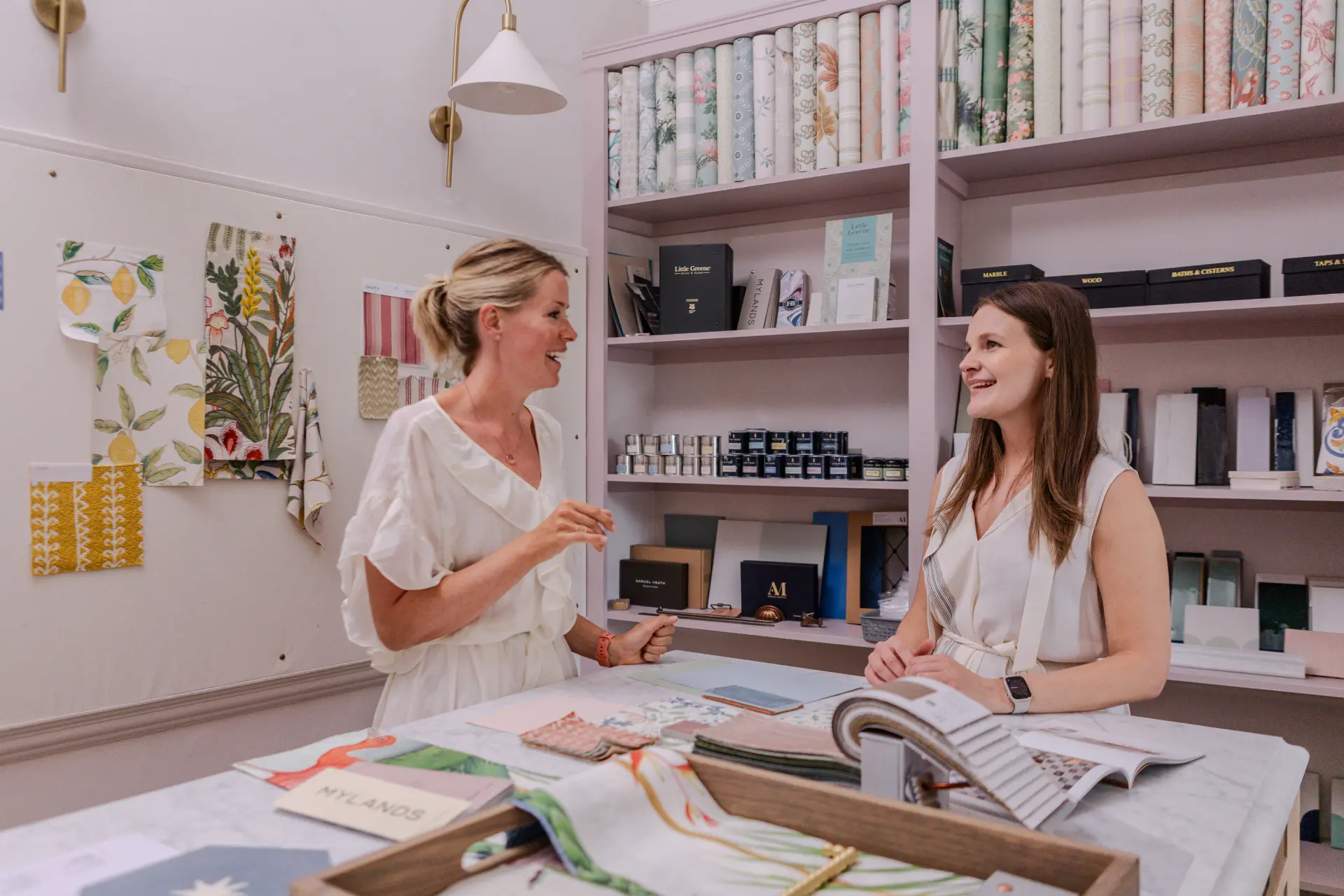
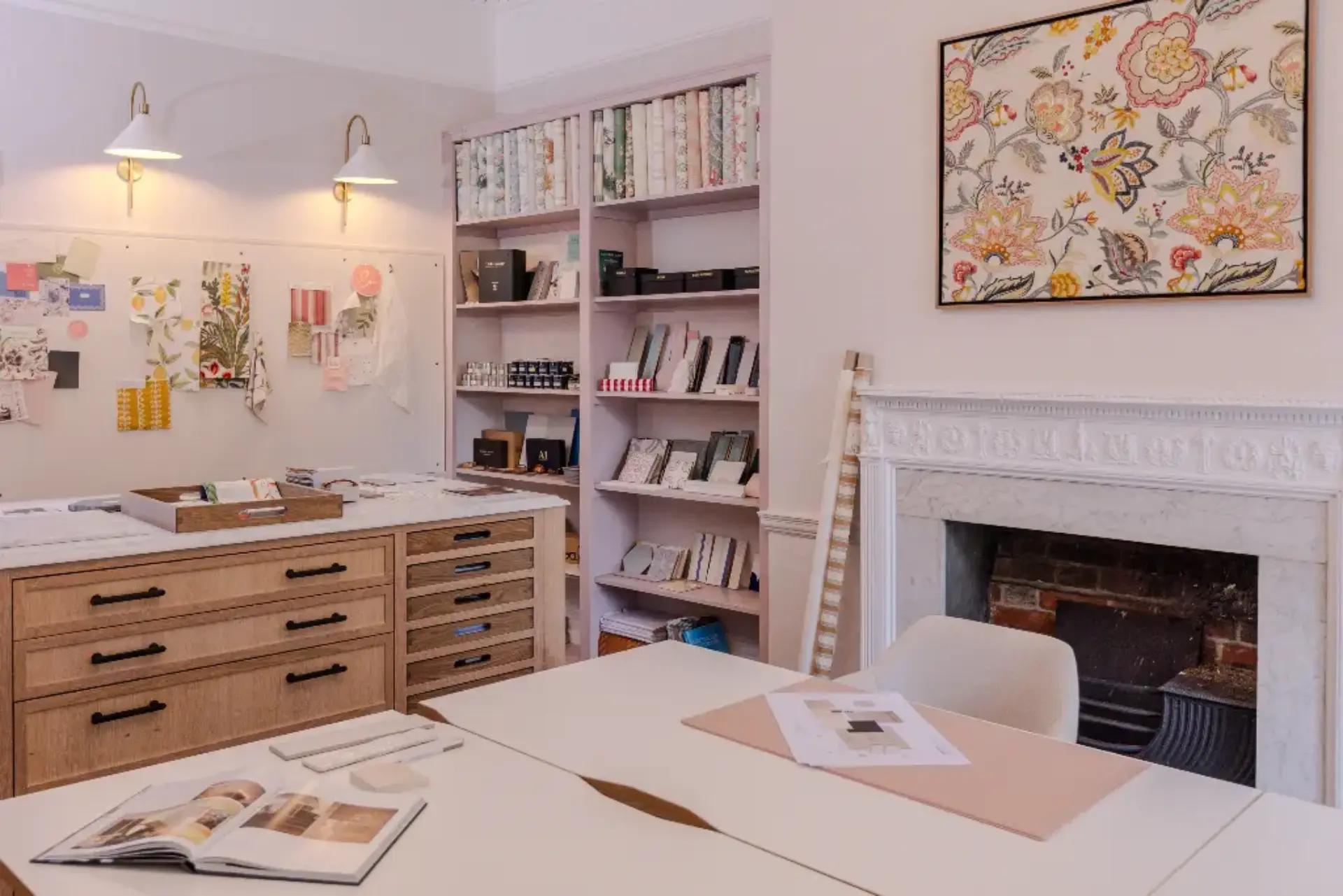
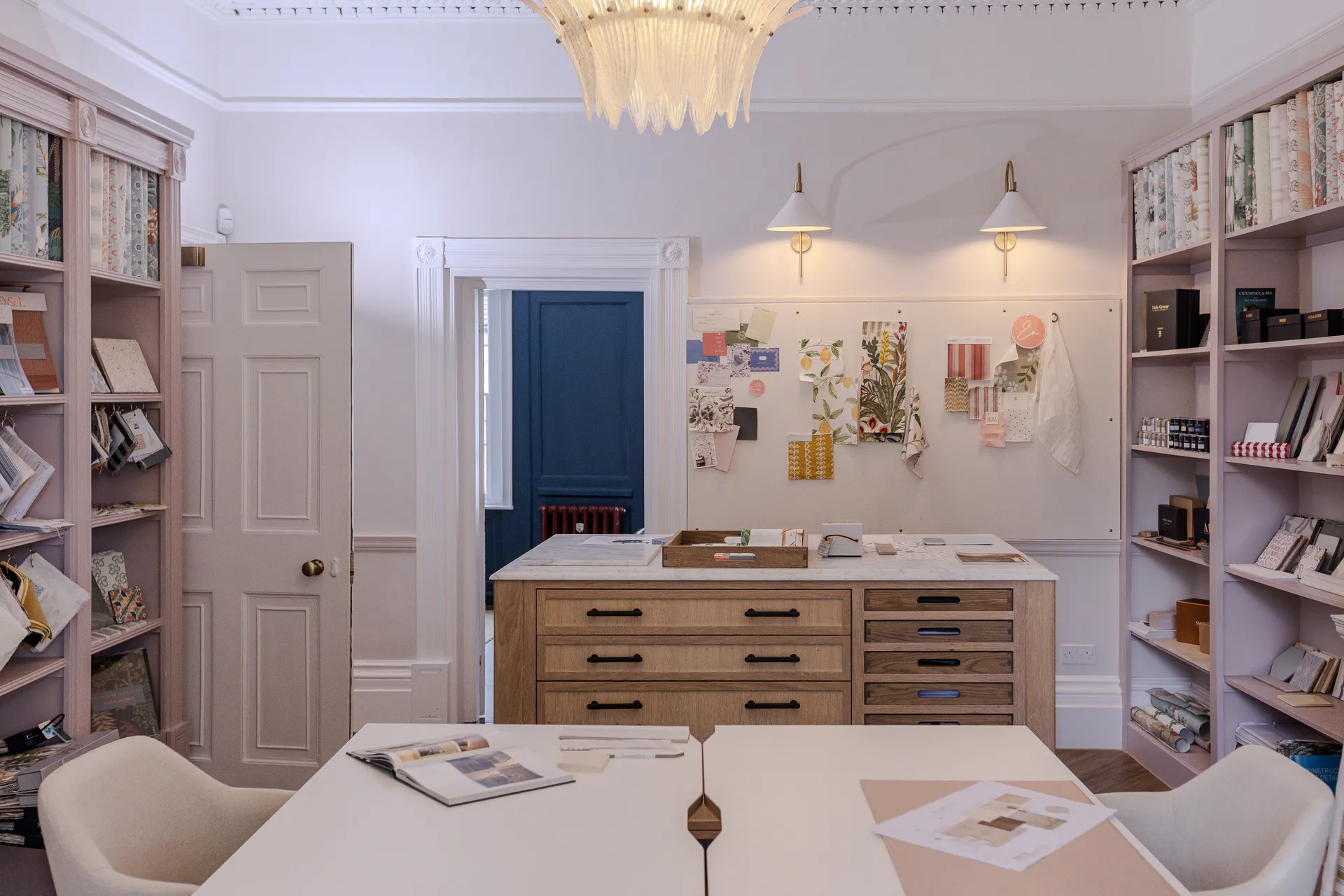
We created an interior design studio and material library, where clients are immersed in the fabrics, materials, and finishes which we specifiy within our designs.
Full-height shelving lines the walls, allowing fabric samples, tiles, and material palettes to be displayed in an organised yet accessible way.
A central island provides space to lay out schemes and come together for design reviews.
This space is key to our detailed interior design process, where clients feel involved in the decision-making, and can see and feel their designs come to life.
The Works
The works were carried out by Brighter Homes over a five-month period, running from September to January. The programme progressed smoothly as it focused primarily on internal remodelling and interior upgrades, which suited delivery during the winter months as no major external works were required.
The Client’s Feedback
Latchmere House has become a workspace that feels both practical and considered, supporting a more connected, collaborative way of working across our collective. It is a showcase for what we can achieve when working on a listed building.
The building simplifies what is often a fragmented experience. By bringing people, ideas, and materials together, it supports clearer communication and a more informed, engaging design process. This provides a more elevated, seamless process for our clients.
Have a Project in Mind? Office Interior Design and Refurbishment, Thoughtfully Delivered
Elizabeth Nixon Interior Architecture and Design works across Kent and Sussex, with extensive experience in listed buildings and period properties, as well as contemporary projects.
Whether you are planning an office refurbishment, updating a contemporary home, or undertaking a period property renovation, we shape each project around its character. We refine layout, materials, and finishes to create spaces that are both functional and distinctive.
To arrange an initial consultation, contact us here.
More projects
Discover some of our latest design creations and projects.
Interior design Canterbury project: office refurbishment of a Grade II listed building, combining heritage and contemporary interiors.

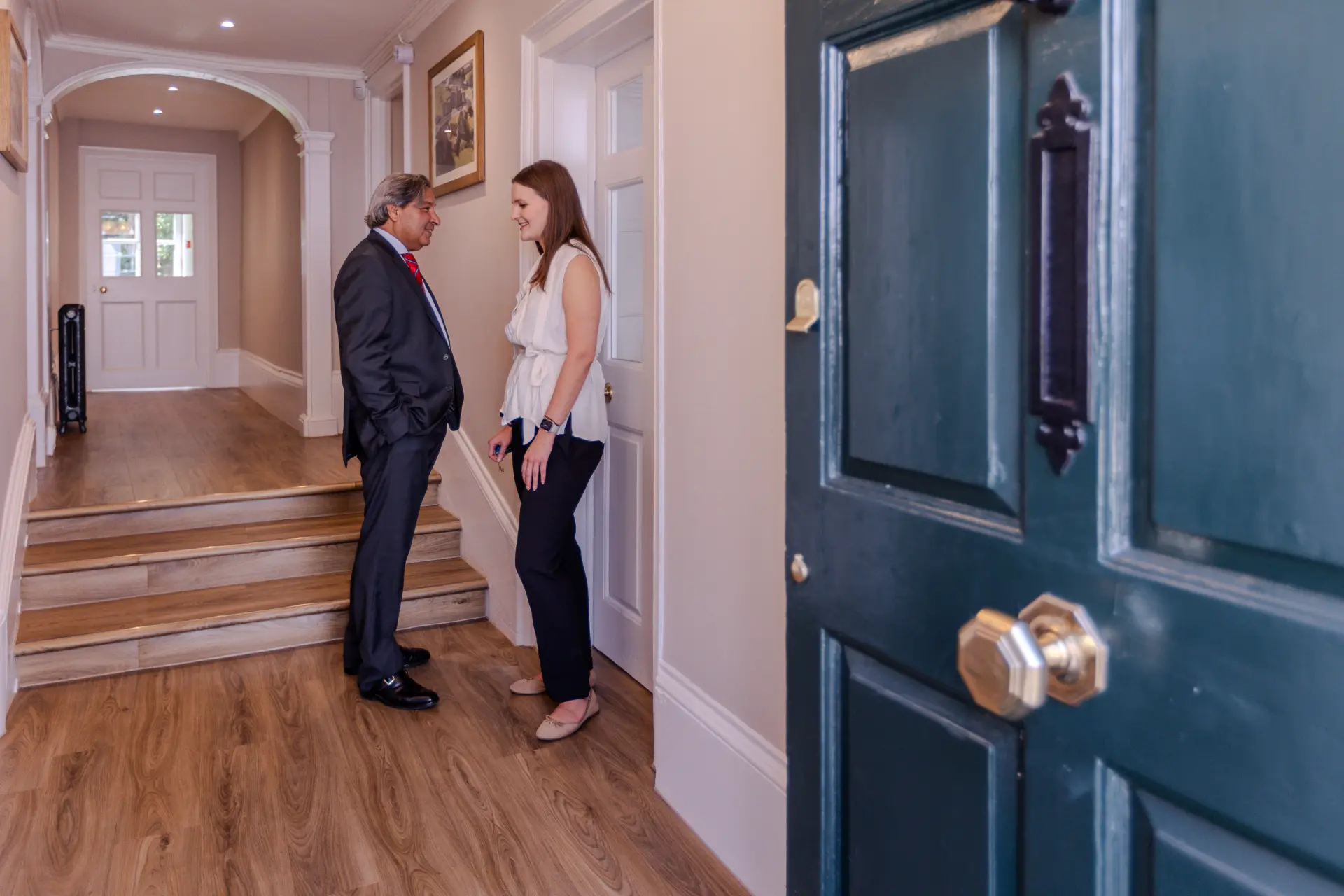
A complete bungalow transformation featuring open-plan living and contemporary yet warm interiors.
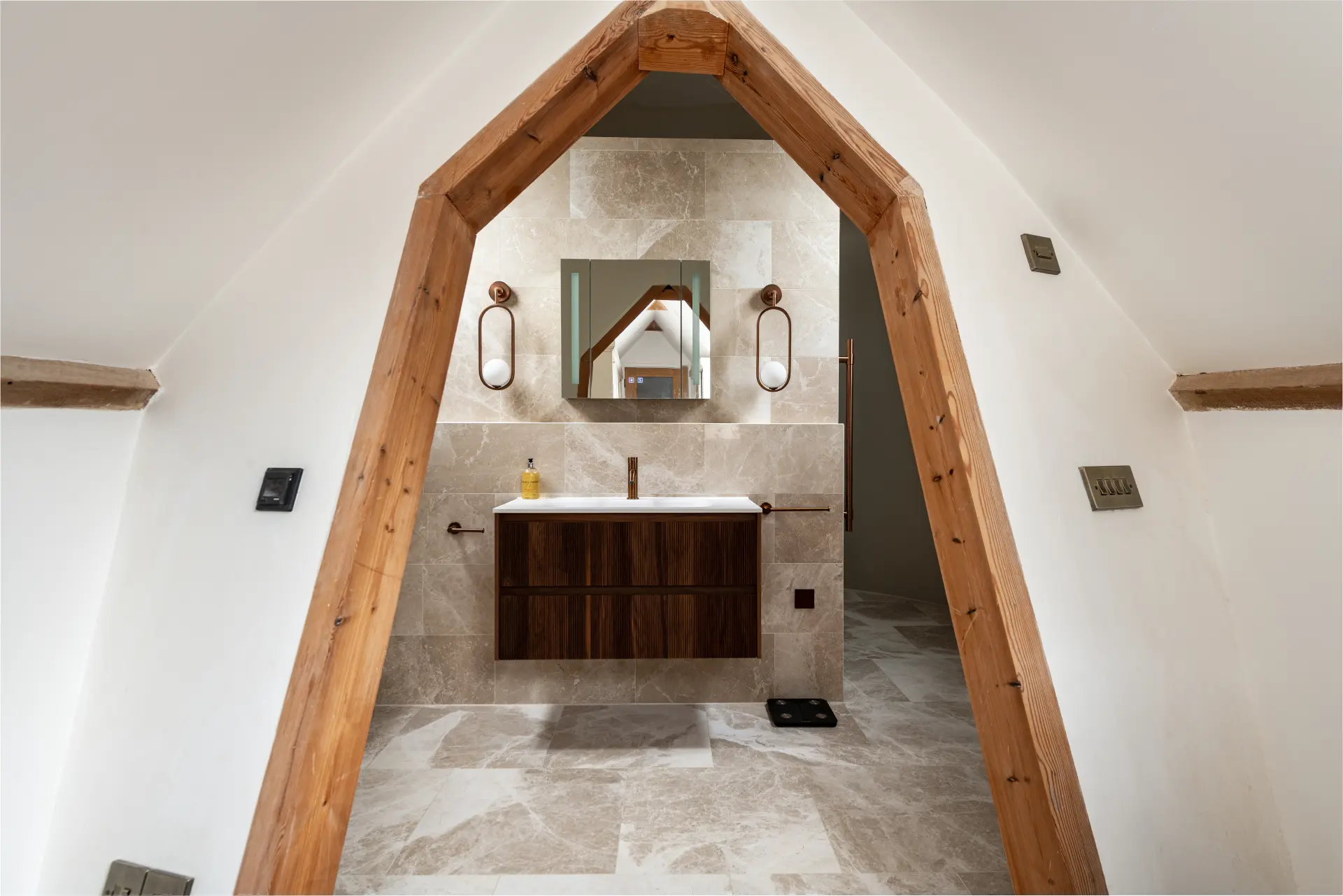
Bathroom conversion project in Canterbury: a contemporary remodel within the roundel of a listed oast house