
Listed Building Renovation: The Role of Interior Design
Planning a listed building refurbishment? Learn how interior design helps balance heritage and modern living.
Renovating a listed home demands a nuanced approach. These buildings carry distinct character, history, and craftsmanship that need to be carefully preserved while still functioning as practical, liveable homes for the future.
Even simple changes may require listed building consent, so decisions around layout, materials, and service integration need to be approached thoughtfully.
A successful listed building refurbishment brings together interior design and architecture, balancing how the building performs with how the home needs to function, while respecting its significance.
Can You Decorate the Inside of a Listed Building?
In most cases, yes, but with important caveats.
Decoration that does not affect the building’s character, such as painting previously finished surfaces or introducing furnishings, is usually acceptable.
However, in listed properties, the line between decoration and alteration is not always clear.
For this reason, it is always best to check with your local planning authority or conservation officer before making changes. An interior architect can help guide the process by obtaining any relevant consents - such as listed building consent - preparing appropriate proposals, and assisting with interior design.
Understanding Listed Status and What It Means
One of the first challenges in any listed building renovation is understanding how much change is acceptable and which elements are most important to the building’s character.
In England, buildings are typically classified as Grade I, Grade II*, or Grade II, depending on their level of historic and architectural importance.
Regardless of grade, the purpose of listing is the same: to protect the fabric and defining features of the structure. This protection extends beyond the exterior to include internal layouts, original elements, and materials.
However, Historic England makes it clear that the aim of listing is not to stop change, but to ensure any alterations are in keeping with the building.
Designing Around How You Live
Listed properties were not designed for modern living. The same features that give them their character - narrow corridors, uneven floors, and limited storage - can also make them less practical to live in.
This is where specialist expertise and experience in interior architecture become essential.
At Elizabeth Nixon Interiors, we approach each historic home renovation by first asking: how do the owners want to live in their home? We then consider how their lifestyle can work within the existing building.
This involves rethinking how spaces work rather than changing them. We often rework underused rooms to improve flow and design bespoke cabinetry to introduce storage without disrupting original features.
In some cases, we can repurpose secondary spaces to accommodate bathrooms or utility areas, reducing pressure on more sensitive parts of the building.
Where additional space is needed, we can design extensions - subject to approval - that incorporate open-plan living without compromising the existing building.

Introducing Modern Systems In Listed Properties
Integrating modern services can be complex in listed buildings. Every decision requires a balance between performance and preservation.
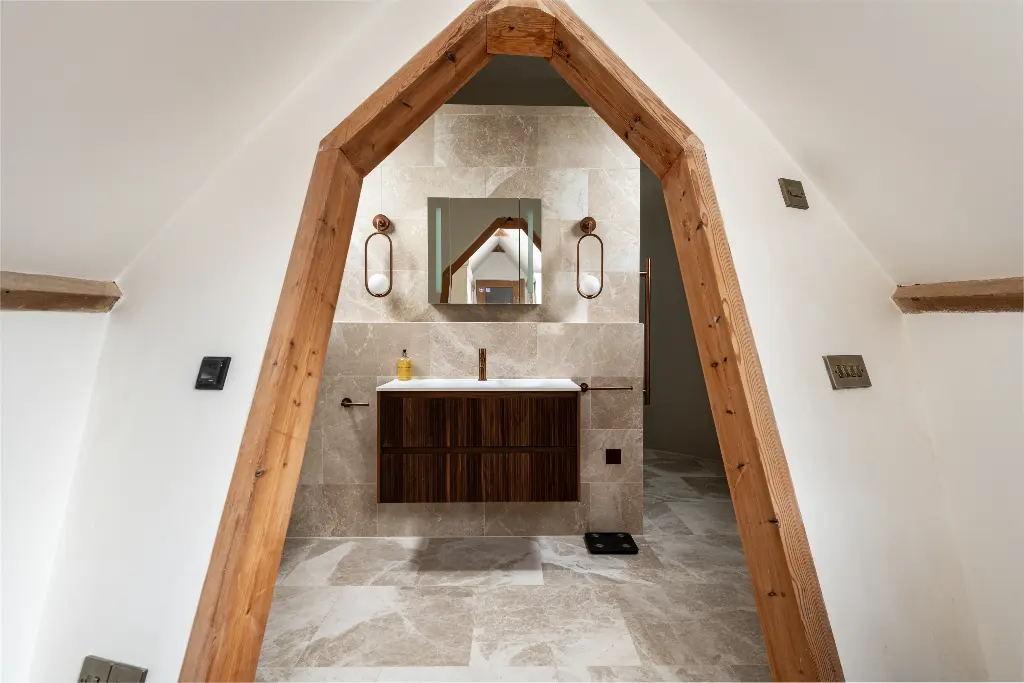
Bathrooms are often the most technically demanding spaces, as drainage, waterproofing, and ventilation need to be integrated without affecting historic materials. We have extensive experience doing this without compromising the building.
By identifying discreet routes within floor voids, wall linings, or less sensitive areas, we conceal wiring, pipework, and ducting. This allows us to introduce underfloor heating, recessed lighting, and ventilation within the existing fabric.
Furnishings and Finishes in Heritage Interior Design
Selecting furnishings and finishes for a listed building’s interior demands thoughtful choices. Every element needs to sit comfortably within its context so it feels appropriate.
We choose furniture, lighting, textiles, and wall finishes for their quality and longevity, prioritising materials that sit naturally within the building.
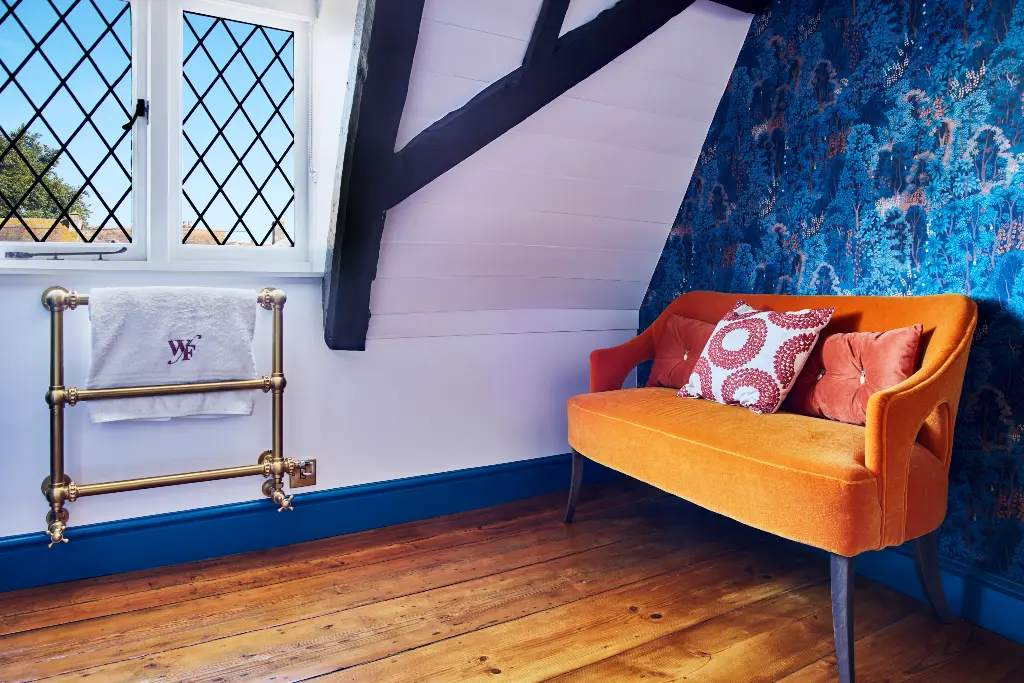
We do not exclude contemporary elements, but we introduce them with care. We combine them with traditional materials and detailing to create a subtle connection between past and present, creating interiors that feel both cohesive and current.
For example, in bathrooms, we can pair minimal fittings with traditional materials such as stone or timber, so the space feels modern while staying in line with the building.
Working With the Existing Fabric
Historic materials, such as solid timber, lime plaster, and traditional masonry, perform differently from their modern equivalents; they are often breathable and flexible. Introducing incompatible products can trap moisture, leading to long-term damage.
Where possible, repairs should use like-for-like materials, and new elements should work with the building. This might mean using lime-based finishes instead of modern gypsum plasters, or designing joinery that allows the building to move and breathe naturally.
At Elizabeth Nixon Interiors, we help source and specify materials that respond to the building and support its natural performance.
Specialist Craftsmanship in Heritage Interior Design
A listed building refurbishment often involves working with skilled craftspeople who understand traditional techniques and can achieve a level of detail that standard methods cannot.
From bespoke joinery to carefully restored features, craftsmanship plays a central role in ensuring that new interventions feel appropriate.
At Elizabeth Nixon Interiors, we work with experienced craftspeople and artisans who deliver the precision and care required when working with historic materials and detailing.
Why Early Interior Design Involvement Matters
Interior design should not be an afterthought in a historic home renovation.
Involving an interior designer early helps align the design with planning and conservation requirements from the outset, reducing the risk of revisions later on.
It also allows technical challenges, such as routing services or integrating storage, to be worked through in a coordinated way.
When interior design comes in too late, it limits what can be achieved.
Collaboration With Specialists
A successful listed building refurbishment relies on close collaboration among a range of specialists. The outcome depends not only on good design but on how well different disciplines work together from the outset.
Elizabeth Nixon Interiors is part of The Latchmere House Partnership, a collective that brings together architects, engineers, interior designers, surveyors, and property specialists under one roof.
This integrated approach allows projects to be considered as a whole, bringing design, planning, and technical requirements together early on.
In listed properties, where there are more constraints and decisions carry more weight, this level of collaboration is key to achieving a result that supports day-to-day living while working with the building.
Have a Project in Mind?
Elizabeth Nixon Interiors is a full-service interior architecture and design practice working across Kent, Sussex, and the South East.
We specialise in listed properties, focusing on thoughtful, refined interiors that respect each property's character.
As part of The Latchmere House Partnership, we provide an integrated service across renovations, refurbishments, and alterations - from early planning and consent applications through to detailed design and delivery.
To discuss a listed building or historic home renovation project, get in touch.
A version of this article first appeared on Listed Heritage, the membership journal of The Listed Property Owners’ Club.
More interior design blogs

